

In the Beginning
It is intriguing to think that in today’s computerized, sophisticated world, we’re still using one product that was discovered – quite by chance – more than 10,000 years ago.
Vinegar. Simplicity itself (although its manufacturing process today is anything but). The French said it succinctly: vin aigre – meaning sour wine. That is its origin, the discovery that a cask of wine gone past its time had turned to a wonderful new product. Through the centuries vinegar has been produced from many other materials including molasses, dates, sorghum, fruits, berries, melons, coconut, honey, beer, maple syrup, potatoes, beets, malt, grains and whey. But the principle remains unchanged – fermentation of natural sugars to alcohol and then secondary fermentation to vinegar. You might say wine is to grapes what vinegar is to wine.
The ancients were quick to find the remarkable versatility of vinegar. Around 5,000 B.C., the Babylonians used it as a preservative and as a condiment, and it was they who began flavoring it with herbs and spices. Roman legionnaires used it as a beverage. Cleopatra demonstrated its solvent property by dissolving precious pearls in it to win a wager that she could consume a fortune in a single meal. Hippocrates extolled its medicinal qualities and, indeed, it was probably one of our earliest remedies. The Greeks also reportedly made pickled vegetables or meats using vinegar. Biblical references show how it was much used for its soothing and healing properties. And when Hannibal, a great general, crossed the Alps with an army riding elephants, it was vinegar that helped pave the way. Obstructive boulders were heated and doused with vinegar, which cracked and crumbled the barriers. By about 3,000 B.C., the making of homemade vinegar was being phased out and, in 2,000 B.C., vinegar production was largely a commercial industry. During the American Civil War, vinegar was used to treat scurvy, and as recently as World War I, it was being used to treat wounds.
Today’s Vinegar
Throughout history, vinegar has proven to be the most versatile of products. The dictionary defines versatile as “capable of turning with ease from one thing to another,” and for the past 10,000 years consumers have used vinegar in a variety of ways.
The vinegar produced and used today is much like the product of years past, but with newly discovered flavors and uses. The mainstays of the category – white distilled, cider, wine and malt have now been joined by balsamic, rice, rice wine, raspberry, pineapple, chardonnay, flavored and seasoned vinegars and more. See the Specialty Vinegars section below for more information on these products and how to use them.
The United States Food and Drug Administration (FDA) requires that any product called “vinegar” contain at least 4% acidity. This requirement ensures the minimum strength of the vinegar sold at the retail level. There are currently no standards of identity for vinegar however the FDA has established “Compliance Policy Guides” that the Agency follows regarding labeling of vinegars such as cider, wine, malt, sugar, spirit and vinegar blends. Other countries, as in Europe, have regional standards for vinegar produced or sold in the area.
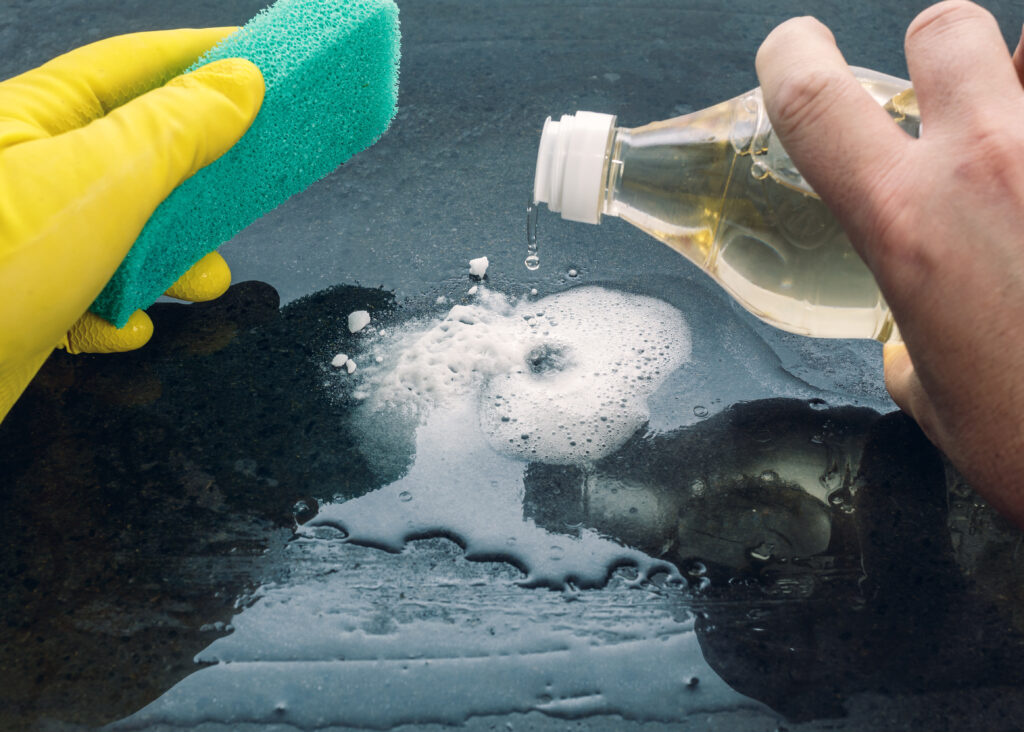
From the kitchen to the bathroom and beyond, vinegar is the most flexible of products sure to have a daily use in your home and life. See the VI Tips section for more information about how to use vinegar in and around, and even outside, your home.